
Building the Foundation
Voices From the Field
Brian Park, M.D.
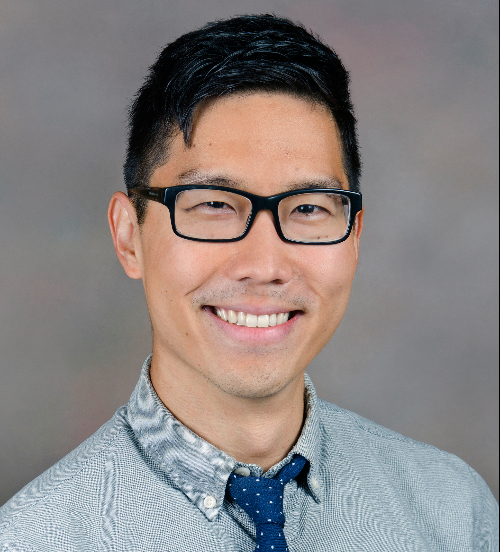
Dr. Brian Park is a family medicine provider at Oregon Health & Science University (OHSU) Family Medicine at Richmond. Dr. Park is passionate about creating a more relational and inclusive health system for patients and communities by bringing diverse communities together to create systems and social change. He founded and oversees a community organizing program in which patients, healthcare providers and community partners come together to create solutions for local health equity issues. He also directs a leadership program in which healthcare students and professionals develop relational leadership skills to better partner with one another to create systems and social change. Dr. Park was born in Minnesota and raised by South Korean immigrant parents. He saw firsthand how language barriers and cultural differences influenced his family’s experiences with the healthcare system. Because of that, from a young age he became interested in how healthcare could advance justice and equity.
Q: What do you regard as the leading edge for primary care teams these days in terms of current challenges and creative solutions?
A: There is more of a collective mainstream awareness of the need to partner with patients and families. In Oregon, there has been such an ongoing emphasis on whole-person care, community health workers (CHWs) in the primary care setting, and in community-based organizations. At Richmond Clinic, the CHWs have really solidified their role in both doing social needs screening and providing assistance to people who screen positive. They are also focused on creating more cultural or racial congruence with families. This allows the providers to focus more on their expertise in medical care and allow the CHWs to focus on those social pieces where they have so much expertise.
I hear from a lot of healthcare leaders about their work on internal culture and the need to respond to mass burnout and people leaving the workforce. This is about going beyond being adequately staffed, but really about creating places of belonging for people of color working in primary care, as well as getting back to the roots of community health and truly being a community health center. It’s not just about the things we do in terms of our services, but about the culture and adaptive reserve that we create within our teams.
People seem more aware of the importance of things they saw as soft skills before. In my work with the Relational Leadership Institute, we are getting a lot of requests for team building and relationship building work, maybe from people who don’t even really understand it. We are focusing on readiness and ensuring that there will be a good chance of adoption, and not just grasping at a quick fix. The relational approach can help address conflicts or gaps between members of an interdisciplinary team; for example, medical and behavioral health providers. There has been a subtle but notable shift in the culture, recognizing that relationality may be a soft skill, but it is still foundational.
Q: What are you currently focused on in terms of equity-focused innovations in primary care? How is it going?
A: The rise of digital health and the understanding of its capabilities has been substantial. The first big wave of digital health with the onset of the COVID-19 pandemic really introduced so much more access to primary care by reducing transportation barriers and the obstacles to coming in. Now, we are really learning about how digital health imposes its own obstacles and has serious health equity implications. Some culturally specific groups really want face-to-face care, and they will travel an hour for it because they want to be in the room with the provider and to be touched physically by them. Even if there are transportation challenges, they may still want to do that. I am involved in a project with a culturally specific organization trying to use human-centered design to understand what digital health means to them and what they want out of it. Some of the things that we’ve learned about are obvious, like having MyChart in more languages than English, but then on the less obvious side, we are elevating youth as digital experts and leaders who can help their elders with bridging the digital divide. Recreating the fabric of connection across generations is important in many cultures, and with this approach we can do both.
Then, there are other groups who just want face-to-face care, so some of the community organizations are doing in-person teaching on digital tools for people who might be hesitant about going digital, but really need that kind of access. They are trying to be very intentional about their process to share power, offer resources, uphold lived expertise, and really try to create these spaces where solutions are collaboratively designed.
We are working hard to build a health equity organization, and to ensure that we are putting communities at the center, slowing down, creating trust and partnership, and letting the strategy emerge from there. We are really focused on community-partnered or community-led work where healthcare is providing resources or social capital, but community is leading the way.
Some of the biggest things that have happened in our community organizing work is recently wrapping up a two-month civic engagement project, taught all in Spanish, to 23 Latinx people with mixed immigration status. Those people are feeling really empowered, and they are planning to host a health justice summit later in the summer. This was really consequential to actually building power for these people and the confidence to exercise it.
We have also been organizing justice-involved folks to address care gaps because of the enormous elevated risk of death in the first 30 days after release from imprisonment. We are trying to focus on knowing when people will be released, ensure that they are enrolled on the Oregon Health Plan, and connecting them to primary care and medication-assisted treatment, if they need it. We are working on this with a core team of folks with lived experience with this issue.
Q: What interesting things are happening in your practice that go beyond the walls of the clinic?
A: We are working on accessing pockets of money that are assigned for community benefit or community partnerships, but then fall short by centering the healthcare delivery system. We are really trying to create longer-range thinking and investment, and trying to radically reorient healthcare around people, place and power.
We just got funding to geomap all of the patients at our clinic and stratify the population using race, ethnicity and language (REAL) data. We saw even greater inequities within certain neighborhoods that emphasize the impact not just of individual characteristics, but also community or neighborhood characteristics. With this information, we are going to focus on two neighborhoods in east Portland and do quality improvement to improve care processes for people of color with diabetes, including how we deploy panel managers, clinical pharmacists, CHWs and other members of the care team. We are going to have CHWs focus on social screening and assistance, as well as organize people within their neighborhoods on what factors impact their health in their area and what can be done to improve the health of their place. We hope to create a process blueprint for how to both improve medical processes, but also partner with people to improve the health of their community.
Jillian Robinette, MBA
Jillian Robinette serves as the director of The Learning Well, a new La Clinica service that provides whole-person health education, workforce development and support with the goal of making total wellness accessible to every member of the community. Jillian previously served as a practice manager at La Clinica’s Wellness Center, Acute Care Clinic, and Birch Grove Health Center, and provided behavioral health support for the organization. She has been with La Clinica since 2011.

Q: How has La Clinica approached designing trauma-informed and patient-centered spaces for people to connect with their primary care teams?
A: Primary care clinics are often very maze-like. We use rounded corners and clear sightlines as much as possible to help people feel safe. At La Clinica, we wanted to create suites and pods that communicate to the patient who their team is, and that starts at the front desk. We created sliding doors from the reception space into the team room so that there was immediate access but no violation of privacy.
Q: What do you think is most important for designing spaces to effectively support primary care teams?
A: Good team-based care requires creating an environment where you are sitting together doing your work in a way that is compliant and respectful to the patient’s care and people sitting around you, as well as pulling in others who are relevant to the care. For example, the receptionist is the first point of contact for care and needs to have a pathway to being part of the team, but not part of every conversation clinically. You can co-locate all kinds of things, but that can end up feeling really overwhelming to staff.
We have embedded pharmacies now, and specifically put the pharmacy in a centrally located space in the building so that it is both accessible to all within, but also available to the public who might not use the clinic. We have a pharmacy consultation room, and the providers can walk the patient to that space and have a collaborative conversation with the pharmacist to ensure that the patient is well set up with their meds. We also have a centrally located lab station in the wellness center that serves all three suites. Rather than sending the patient on a hunt for that spot, we set up the workflows so that the lab tech can come to them, and or we create sample stations within the suites.
We set up our suites so that the team is not distant from the exam room. When you have a colocated space, the team room is sometimes far away from the exam rooms, and that leaves the provider without much team support, and then it just ends up still being a provider-specific model. We created the corridors to be a large circle with three suites wrapping around the exam rooms so that they have close and direct access from the team rooms to the exam rooms. As the provider is walking the patient out, they are walking by the team room and making visual contact with whoever is there so that they can do a warm handoff or introduction right in the moment in a very opportunistic way.
We have also done a lot of work to embed some of the alternative treatment rooms within the design of the traditional primary care rooms; for example, a small group room and consultation room that is embedded near the primary care rooms. They are fully a part of the care team and embedded together, not just an alternative tacked alongside.
We are always thinking about how to make it more user-friendly for the staff as well as the patients. We had to do a lot of lean process improvement to make this work because when we started by just designing for the patients, it created extra steps for the staff. We really had to work together to figure out how to make it better for everyone so that it wasn’t exhausting for the staff because you can’t provide good care when you’re exhausted. You have to stick with it and listen to the people doing the work.
Another important element is to use space design to keep all the work flowing in the right direction. We use a visual display board to show works in progress, quality metrics, and panel-level performance, and focus on the small numbers of people who are being cared for by the team and where they can make a difference in people’s lives.
Q: What do you think is important for building physical spaces that support health equity?
A: We are currently going for a health equity accreditation. and are really looking closely at our spaces and especially thinking about signage. We are seeing opportunities to improve how inclusive our signage is for wayfinding and to communicate belonging. Instead of asking people to rely on written signs, we want to be able to say, follow the orange signs or the arrows out. We are trying to use pictures of the people we serve, not just stock photos. We are improving the signage at the front door regarding what languages we speak or can interpret so that people know what to expect before even coming in.